Saturday, March 3, 2012

Piano Lessons

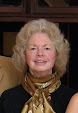
Marjorie, Margo and James Melton in Greenwich, c. 1955

When I was growing up, there was not the intensity of planned lessons and activities for children that there is today, and I was left to amuse myself much of the time. But I was rarely left alone, as my father had an almost paranoid fear of my imminent dismemberment or death. (There was always a governess or companion in my life until I was about eight years old.) As a result, I never learned French or how to play the piano, nor did I become an accomplished tennis player, sailor or equestrienne...though I dabbled in all of the above on my own terms. My father bought me a half-size violin, which I never played. He gently pushed me to take piano lessons. But living with a father who played by ear, I was not content to start from ground zero with scales, for heavens sake, and gave up very early in frustration. The photo above is wishful thinking, shall we say.


Tuesday, February 28, 2012

Hollywood Walk of Fame


Did you know that there are two stars on Hollywood's Walk of Fame for James Melton? One for radio (at 6300 Hollywood Blvd.) and one for recording (at 6564 Hollywood Blvd.)

If any of you get to LA in the near future, and could send me a photo, I'd really appreciate it!

Monday, February 13, 2012

Melton as ad pitchman


During the 1950s my father appeared in a number of print advertisements. Whether this was an attempt to bolster the family exchequer during a time of dwindling musical engagements, or an effort to keep his name and face in front of the public, I'll never know. Probably some of both. Some ad endorsements made sense, like those for Gulf Oil or Purolator Oil Filters and other car related products. But some of them were for Mayflower Movers or Murine. My mother even got into the act in an ad for FTD. I've known about these ads, and collected them largely via e-bay, over the years.

But my friend in Maine, Conway Stone, found an ad from 1935, in Popular Science magazine, which has my father endorsing Carborundum Sharpening Stones which aid in keeping his tools sharp for making the model of his boat Melody. I knew he had a scale model of the yacht, but I certainly didn't think he constructed it himself! The Melody model (whoever made it) traveled with the Meltons to California in 1936 when my father was called back to Hollywood by Warner Brothers to make "Sing Me a Love Song" and "Melody for Two."

Marjorie & James Melton with "Melody" model


Thursday, February 2, 2012

James Melton & Jack Benny


While doing research for the biographical memoir of my father, I was drawn to Joan Benny’s biography of her father, Sunday Nights at Seven. The book I was writing was based largely upon an unpublished manuscript by my mother—just as Joan’s book used an unpublished manuscript of her father’s. I was intrigued by how she intertwined her own memories with those of her parents. Plus, there was the fact that my father had been on Jack’s radio show a number of times in the mid 1930s; he and Jack shared an affinity for antique cars; and the Meltons and the Bennys each had adopted a baby girl. I felt a special bond with Joan.

On a very personal level, Joan’s recollections of growing up were remarkably close to mine in many ways. The Meltons and the Bennys both impressed upon their only daughters how lucky we were to be adopted, because we were “chosen”—that made us special.

We shared the enigma of our parents’ relationship to each other, especially the separate bedrooms. This was always explained to me as a result of my father’s erratic schedule, often necessitating the need to sleep until noon, while my mother had to be up early to get me off to school.

As children, Joan and I both liked our milk served warm rather than ice cold. Joan says in the book it’s because in the 1930s it was believed that cold milk was bad for children. Whatever the reason, I too grew up liking warm milk.

Although Joan appeared on her father’s television show, the closest I ever got to show biz was an occasional appearance on the concert stage when my father needed a little girl to whom he could sing “Surrey With the Fringe on Top” from Oklahoma. (See my 9/5/09 blog post)

Jack sized up TV as a “man-eating monster” which gave performers too much close-up exposure and lead to audience disinterest quicker than radio. How true! My father’s TV show, “Ford Festival,” lasted only two years, while his radio career lasted for twenty.

Here’s a bit of Benny-related trivia. In the mid-1930s my father made three rather forgettable movies for Warner Brothers. In “Melody for Two” my father plays a band leader who has career ups and downs due to professional and personal jealousies. Predictably, it all comes out right in the end, he gets the girl and the conniving music arranger gets his comuppance There's a brief appearance by a black janitor who supplies the success-producing hot swing arrangements—the latest thing from the Harlem clubs. It sure looks and sounds like Eddie Anderson, Jack Benny's gravel-voiced sidekick "Rochester," but he's not named in the credits. (See my 5/13/10 blog post)

Saturday, January 21, 2012

More about the Autorama


As a result of the historical piece about the Autorama that appeared in the Palm Beach Post back in October, I was contacted by Jim Inglis who sent me the attached photo. Here's what he wrote about it:

"The history of the signs, as I understand, is that your Dad commissioned them in 1952. He had someone (or a team of someones!) research every different make of American automobile manufactured up to that time (pre internet!!!) and had the names painted on these 2 signs at a cost of $3,000 1952 dollars!!! - probably close to the cost of a new Cadillac at the time. When the museum closed, a local car collector purchased them, and when he passed away in the '70's, the signs went to his son. The son had an auction about 7 or 8 years ago, which is when I acquired them."

I personally don't remember the signs (nor are there Autorama photos of them), but it is just exactly the sort of thing my father would have done. He was so very proud of the American automobile industry — although he collected French, German, British models as well. I'd love to know if anyone out there has any more information on these boards.

Sunday, January 15, 2012

Another word about the mural...


from the Autorama brochure extolling the mural and its artist


Just a bit more about the Autorama and the America the Beautiful mural:

While on concert tour, my father had discovered the artist, Bernard Thomas, in Montana and commissioned him to paint a cycloramic three dimensional mural, to be housed in its own circular room, depicting the history of the United States. Recorded narration was provided by Daddy’s good friend, radio commentator and explorer Lowell Thomas, and musical accompaniment was supplied, of course, by James Melton. As the brochure enthused, “Picture yourself in the soft-lighted Mural Room...America the Beautiful being sung by the nation’s favorite tenor...America’s most renowned commentator is telling the story of America the Beautiful, unfolding scene after scene, until song and story have completely swept you through 300 years of our nation’s history.”

My father invested not just his money but his heart in the Autorama. He welcomed people to it as if it were his home. While researching the book about my father, I received a letter from George Roberts of Middletown, New York, which tells such a story: “As my family and I were walking around the museum, we came upon Mr. Melton's office. The door was open. We waited until he got off the phone. He was very cordial. I said how enjoyed his singing. He was surprised that someone so young knew of his music. I started to sing one of the songs from a record I had, and he sang along with me. Then he arranged for us to be taken for a ride around the grounds in an old Dodge touring car. After our ride, he recommended a friend’s restaurant to us for dinner. We went there and were given a warm welcome and great service at the mention of James Melton’s name. We were so impressed with the warmth your father showed us that day that after forty years I can still remember him with fond memories.”

Saturday, January 7, 2012

America the Beautiful Mural

Font size
Civil War section of the mural


The article(s) in the Palm Beach Post on the Autorama have led me to some information about Bernard Thomas, who painted the America the Beautiful mural there.


As you know, the Autorama closed in October 1961. Someone bought the 153-foot mural to decorate a bar, but when they were unable to obtain a liquor license, the mural vanished. It was found in 1979 behind a real estate office in Boynton Beach, Florida. Gene Moore, the attorney who discovered it, contacted Bernard Thomas, then living in Boynton Beach, and asked him to restore it. Thomas restored it over the following six months. He and the Boynton Beach Rotary Club donated the mural to the Boynton Beach Womens Club, to be housed in their Addison Mizner-designed clubhouse.


Thomas, born in Sheridan, Wyoming in 1918, became a camouflage technician at the outbreak of WWII. Later he served in the US Army in Europe. At the recommendation of General George S. Patton, Thomas studied at the Ecole des Beaux Arts in Paris. Upon his return to the USA, he became known for his Western art and documentary murals. Thomas died in 1992.